
I first came across Mark Doty’s work in a poetry class in college. I was late to the game. We read The Art of Description, which focused on Doty’s keen sense of just the right word. After reading his short essay on Elizabeth Bishop’s “The Fish,” I think I was finished. I knew I could never recreate the same sensation in a piece of appreciation and neither could I scribe a delicate, almost uncomfortable, scene. His work made me turn pages with a swift flick and scrawl notes in the margins. Reading someone’s work, their giddy interpretation of another craftsman’s pen, is like brandishing knowledge, new and remarkable, mostly unknown or unattainable. You have to buy into it. You have to want to touch the tip of the pen and press one inky finger to the page because suddenly what was a mystery is overwhelmingly obvious and someone has to put it out into the vast There. Someone has to share what they’ve learned so others may understand or at least seek to understand what you now know to be true.
The title for this piece is borrowed from Doty’s poem “Esta Noche” from My Alexandria. It’s unabashedly my favorite of all his work. In the piece, Doty’s speaker traipses through “Esta Noche, a Latin drag bar in the Mission” and admires “la fabulosa Lola.” She works the stage in proper form, engaging her audience in the act and lypsyncing to them in perfect fashion. The stage is set and all we’ve to do is watch and put it on.
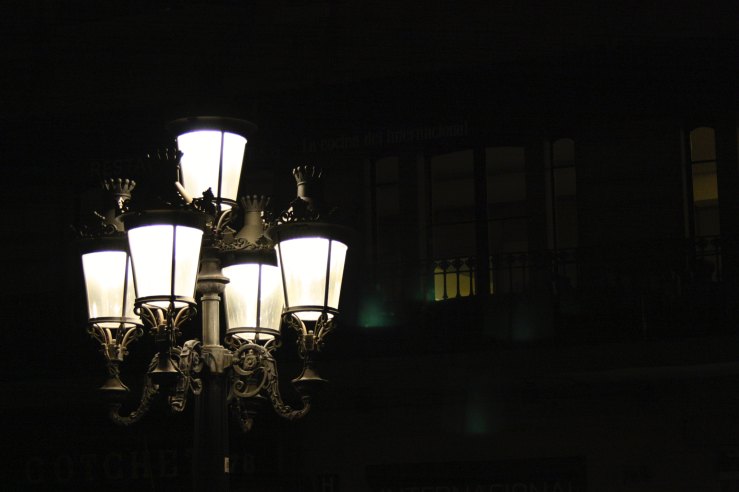
The “it” here being the dress, which in this case is silky and “the color of the spaces between streetlamps.” She requires you to put on the thing, the act, the gown, the hat, the shoes, whatever it is that makes you the person you so long to be, to perform as, to inhabit, to become. That is her sole requirement that you become you even if only for that night. You become you. “You can wear the whole damn / black sky and all its spangles.”
My mom used to tell me to Own It, whatever I was working towards or trying to accomplish. It was an endearment meant to chuff me up a bit, to encourage me, to move me. “Own it,” she’d say. That was akin to “put it on.” Don the garment, toss the potato sack you’ve been hiding behind, and put on that silky contraption. That one. Over there! The one that calls to you, but you’re shy and don’t want the attention just yet. Come Heaven or Hell that dress is coming for you. “Put it on, / it’s the only thing we have to wear.”
In Ireland, I started watching Rupaul’s Drag Race. The transformation was magical and mystical each show. Men would become these illustrious goddesses in a matter of minutes on my screen. Sasha Velour stalked the stage in fabulous gowns and costumes, Mighty Morphing Power Rangers of Glamour and Gaga. It was dynamic! The performance and performative self may be similar to the man behind the drag, but he and she were not exact, were not precise translations or transmutations of each other. I was stunned by the change and I embraced it. They had all it took to be someone full of charisma, uniqueness, nerve, and talent. I wanted that. I wanted to feel alive when I performed. My performance, however dissimilar behind walls and often in my pajamas, takes place with a pad of paper and a pen. That’s my stage for now. I can study it all I like, but until I strike that white and blue expanse with a dash of black ink, I’m a failure purely for doing nothing at all.
To put it on is to act, to perform yourself however she moves and writes and sings. Put it on requires the presenter to go forth and create. It’s a matter of mucking up and editing, of sewing together that gown and choosing the right shoes, be they thick leather boots or stilettos, and putting it on. Be like la fabulosa Lola. Put it on.
P.S. If you’d like to listen to the author read the poem, you can find that here. It’s the second piece he reads to the crowd.

 Word Witch