
This Eve is a second, good Eve. She brings new meaning to women’s parts. I say parts because one of her plays consists completely of monologues about vaginas. All kinds of vaginas. It’s entitled explicitly as such, The Vagina Monologues. I love that particular show. The Good Body, however, covers, or uncovers if you will, women’s bellies, tummies, stomachs, poofs or pooches. Here she discusses in a series of monologues the way women’s bodies are controlled, patronized, manipulated, and affected by contemporary beauty standards, society, and capitalist expectation. Women are preyed on for their money, time, and resources in order to feed the social norms and fill company coffers.
I admit that I contribute and fall prey to the demands of contemporary beauty standards. I still buy makeup and I at least consider shaving my legs for special occasions. Granted, I don’t know what happened to the razors I had, but that’s neither here nor there. I am ashamed of a few parts of my body just as Ensler is ashamed of her own parts as she admits. She expresses that there is at least one part of every woman’s body that each of us wishes to “fix.” Some of us focus on our bellies, some of us wish our hair was curly, others hope for smaller toes that don’t peak out from the tips of our shoes, and others still wish for a larger or smaller bosom. I can’t help but wonder if the first Eve felt this way after her body was shamed in the garden and she and Adam were banned from Paradise. Did she find her flesh disgusting and revolting as women have for centuries? We primp and pluck, pull and plump, inject and ignore, cut and clear our bodies. Like deforestation, we reveal the flesh beneath and behind the clothes and cover-up with a snip here and tuck there. We are forever trying to reshape and remold the skin we live in with new formulas for wrinkle removal.
In high school, there was a trip to Europe. We traveled through Spain, Italy, and the south of France. I came home with a new fascination in European women, particularly the French. Their style and sense of dress and composure was alluring and illuminating. They lived with such grace and poise. They possessed something alien and foreign to me: confidence and acceptance. Or so it seemed. I pored over and perused books on their lifestyles, fashion, beauty tips and regiments, and exercise. In part I discovered that a lot of work actually went into pulling off that composed facade. The nightly moisturizer and lotions and potions that go into retaining such a youthful vibrance and clear complexion are good for your skin, sure. But the pocketbook must be of generous size to accommodate some of that maintenance.
I want to make one thing clear here: you do you. But, consider for a moment accepting the “faults” you find in your physical form rather than purely attempting to annihilate them. I watched a video on Facebook a few months ago from women who were accepting their bodies “in the raw.” I can’t remember the source now, but they spoke with women who were embracing the natural nature of the feminine form like leaving their armpits and legs unshaved, forgoing waxing the hair on their arms, and ignoring the small amount of fuzz above their lips. They didn’t so much denounce cultural norms so much as appreciate the true normative nature of their bodies. That which was natural for their bodies to produce they accepted and even delighted in. No one is calling for you to drop the razor or stop applying eye shadow or quit exercising. What is being asked is simply to take stock and examine our habits. Do we explore these norms and participate in this culture purely to fit in or do these habits actually fulfill us in some way? If the latter is the case, then I don’t see the harm, but sometimes reevaluation leads to revelation.
In one monolgue, Ensler describes what she learned from speaking with Isabella Rossellini, an actor and former Lancome Spokesperson/Model. “I wasn’t meek in photos, no. I knew how to express assertiveness. I knew the glamour of strong women who did what they wanted to do. Like Kahlo, Magnani, like Callas. I could do that in the photographs. The corporation never really wanted that,” Rossellini said. Ensler’s monologues here are not composed from transcribed interviews. She speaks with different women and builds stories based on their conversations crafting the content and honing their discussions to get to the center of their feelings. Ensler distills those interactions in The Good Body. Throughout the work, she discusses these deep-seeded notions and recognizes strong women accessing the sacred or untamed within themselves. Rossellini’s monologue exhibits that in swift one-liners, each notion more potent than the next. Under the guise of perfection, a certain amount of control was exerted over her body and, just as every other woman has, she experienced the shame that limitations and expectations imposed by social and economic hierarchies posit when it comes to bodies of all sorts, whether those are masculine or feminine.
When we explore the state of our bodies, their health and wellness, how they make us feel or exhibit ourselves in the world, and how we engage in conversation about them and with them, we pursue a power that is divine and innate. Within each of us, the possibility to acknowledge our worth separate from socially expected appearances and “norms” exists. We are in control of defining what is normal or expected in society and that structure can bloom and change to allow us more control over our bodies, not in the sense that we inject them with serums and fluids but in the sense that we relish their capabilities and assets. These characteristics, our assets, are borne of understanding the physical in line with the mental and emotional. Our bodies function because each system within them works together to survive. There is awe and wonder in that alone.
“We live in a good body,” Ensler says. “Good body, good body, good body.”
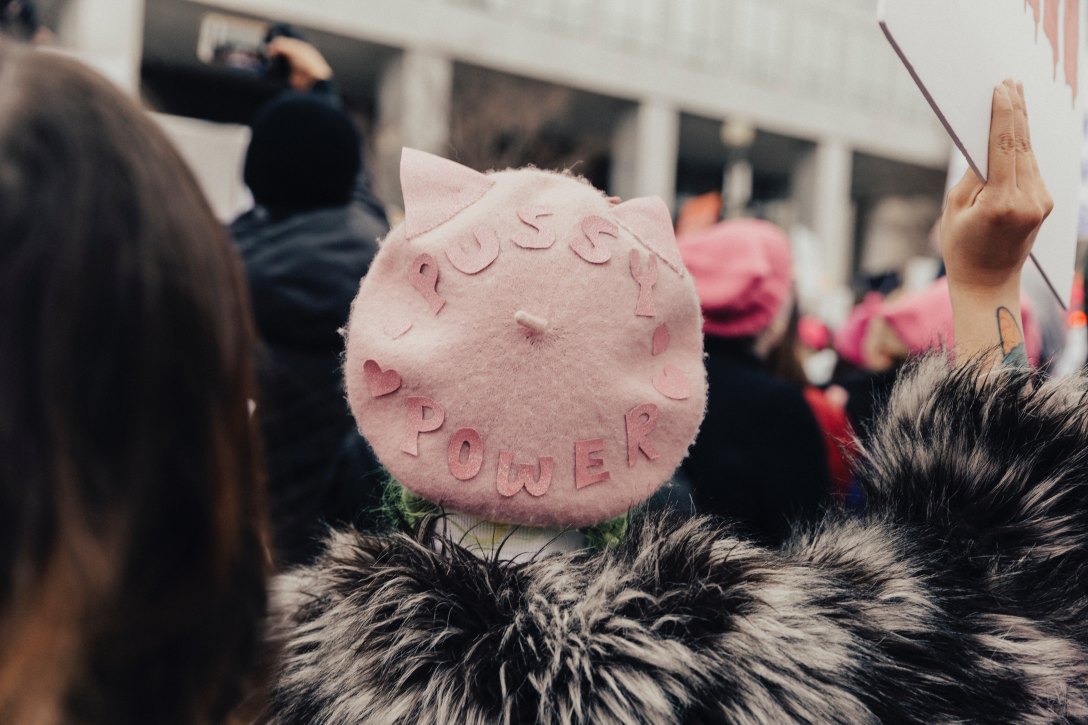
Photo by roya ann miller on Unsplash.

 Word Witch